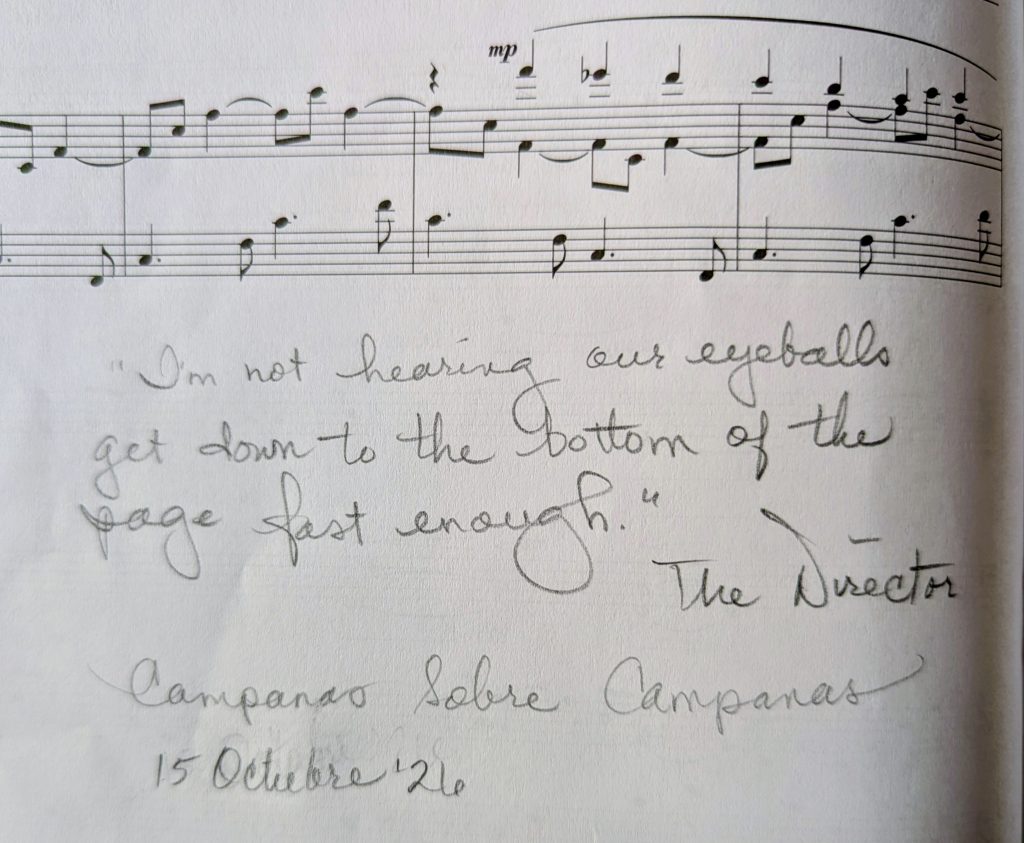
“I’m not hearing our eyeballs get down to the bottom of the page fast enough.”
– The Director, whilst rehearsing the choir through Campanas Sobre Campanas, 15th October 2026
If you’re still struggling with hearing your eyeballs moving – or, perhaps somewhat more plausibly, if you’re struggling with moving quickly and accurately through the Spanish phrases in Carols and Lullabies or moving through any of our other pieces with a lively time signature, you may find it useful to practice with a metronome. One of the weaknesses of the pronunciation guide is that the Spanish isn’t pronounced rhythmically. We’ve done our best to at least provide line breaks in the lyrics (thanks, Lisa, for updating), and there are several free and online desktop metronomes, and myriad apps on iPhone and iOS appropriate for most cellphones.
Many of us are making decent progress on learning these songs and are beginning to enjoy them! Those less sure will find that listening to the pieces on repeat WILL make a difference. We’ve got this!
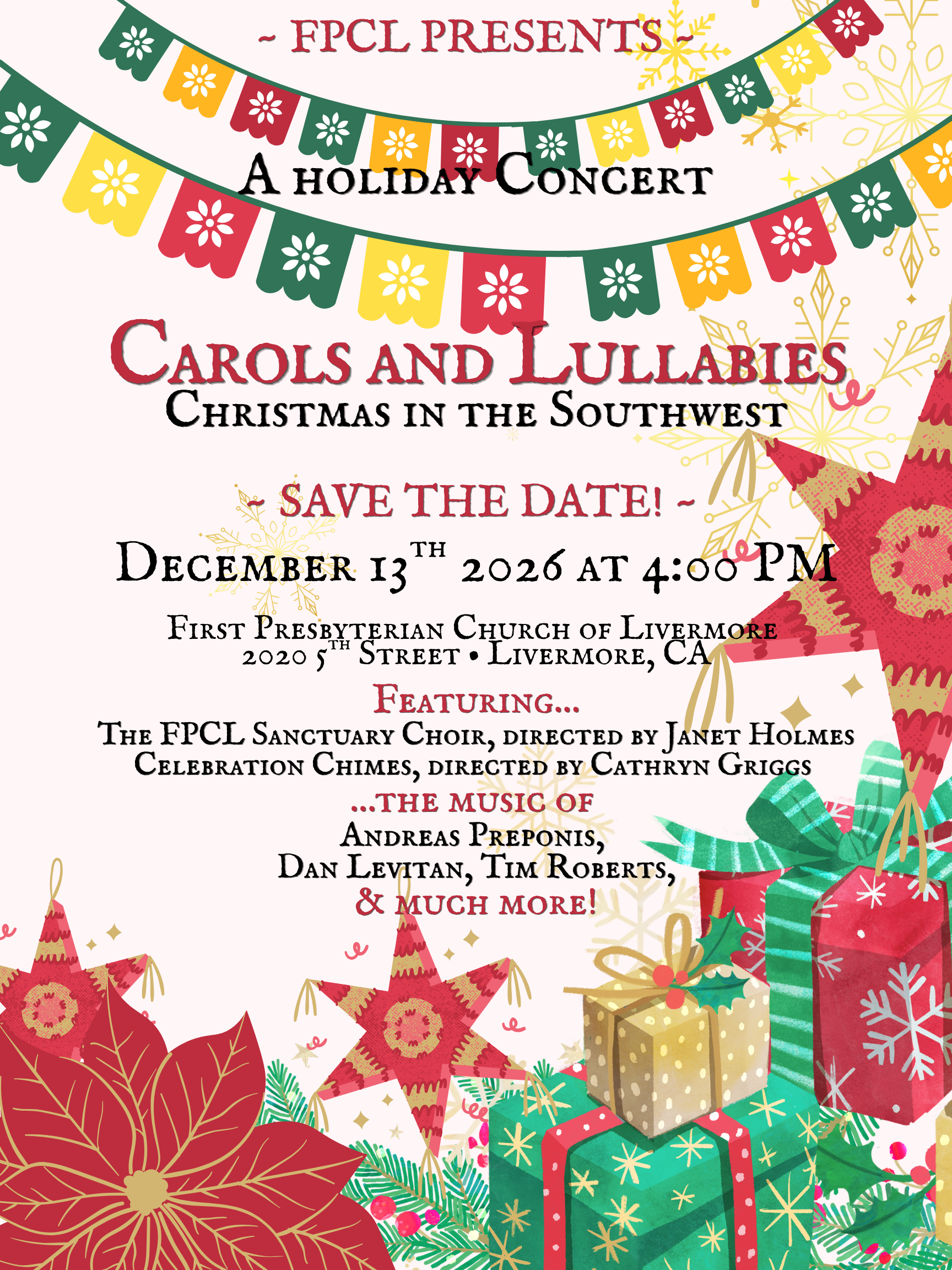
Tell everyone to save the date! The holiday concert is a great change of pace from the parts of the festive season that get a bit tedious and overfamiliar. Let’s get concert PR in front of friends and family before their holiday rush begins!
This is such a great community for sharing resources, and Lisa Sogo has been kind enough to pass along an easier way to navigate and use the recorded tutorial tracks for Carols and Lullabies – bypassing that website and going directly to Soundcloud.
Now we legitimately have zero excuse for not at least beginning to practice this at home. 🫣
If you haven’t already listened through the entire short Carols and Lullabies, there are plenty online. I like this one by the Harmonium Choral Society at St. Peter’s Episcopal Church in New Jersey. The following comes from the program which accompanied the 2011 performance:
The composer has provided the following notes about the work: “Four or five years ago (from 1992) Philip Brunelle suggested I write him a companion to Britten’s A Ceremony of Carols. To a composer, this tempting offer was another way of asking “How’s about writing us a hit?” After several years of me writhing in doubt, a friend, Gary Holt, showed me a collection of traditional Spanish carols he had sung as a boy in Arizona. Excited, I juggled them around to form a narrative. I noted their many connections with Renaissance music along with their homey, artful simplicity. Finally, the overriding image of a Southwestern piñata party for the new baby led me to add guitar and marimba to Britten’s harp and to compose connective music and totally re-conceive the carols. In an often overlooked detail in the Christmas Story, the New Baby bawls loudly as the shepherds leave in the final bars of Chiquirriquitín. (You may hear him in your mind). His parents now must dandle and soothe him to sleep. Tired themselves, they drift off as the angels hover about them in protective adoration.”
Talk about setting the scene.
I’ve gotten into the habit of playing various recordings of Carols and Lullabies when I am waking up in the morning. Maybe you can play it when you’re making dinner, or plug it into your earphones when you’re walking the dog or coming home on your commute. Once we get to know the tunes, the words will be a battle we can more easily win. Most of us can do Church Latin beautifully by now, but if the Basque and Catalan pronunciation is a nightmare for you, no fear – you’re not alone! We’re all in this together – and we’ll all muddle through, to the glory of God.
Upcoming dates to be aware of as we start the long dive into the season of celebrations. NB: This is a living document, subject to changes. Please take special note of times, as The Director may need to make adjustments.
Thursday, Oct. 1 – Dec 10: 7:15 Sanctuary Choir, 8:00 Fold In Susa/Carols & Lullabies Singers
Sat. Nov. 14, 9:00am-12- Fall Retreat Rehearsal
Weds. Nov. 25, There’s NO REHEARSAL for Carols & Lullabies, or etc. – Happy Thanksgiving!
“I’m kind of addicted to the feeling of giving, knowing that I’m doing something good for someone else.” – Dolly Parton, 2021 People Magazine
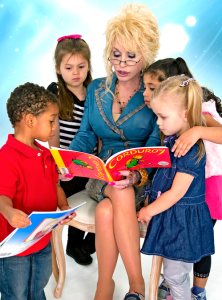
By now you’ll have heard that the governor signed bill SB 931 into law, making September 25th – 9-2-5, like the song “9-to-5” – officially Dolly Day in honor of the late singer and philanthropist Dolly Parton. In advance of the celebration in Union Square in San Francisco, fans are anticipating it as a costume holiday, breaking out the fringe and the falsies, the giant rhinestones, and the cowboy boots. While Dolly did indeed give us a surfeit of glitter and glam, she also gave her heart to her faith, and her money and her time to low income kids and families in the form of books and stories and heartful, hopeful music that lifted up those who listened. In addition to donning your platinum wig on Dolly Day this year, consider volunteering for the play cousins/niblings/grandchildren in your life. Donate a children’s book to a Little Free Library (psst! There’s one at Sherry’s house!) or to your local Friends of the Library bookstore. Clear out your old, gently used musical instruments and donate them to the East Bay Center for the Performing Arts, the Bay Area Girls Rock Camp, or the East Bay Depot for Creative Reuse, which supports teachers. A donation to Minding Music, a local nonprofit program that helps children from low-income families or kids with developmental issues get instruments and take music lessons might be timely as well.
Books and music can be a light in a dark and lonely world to a kid – so, on behalf of the smallfolk whose circumstances have them walking in shadow, arise and shine. Dolly Day or any day is a good day to be kind, and to help bring on the light of a clear, blue morning.
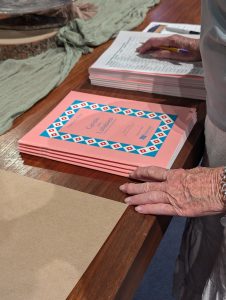
Our Holiday Music Pronunciation Guide has arrived!
Why We Need It: Spanish is a global language, officially spoken in twenty-one countries in the world, and many of us born and raised in the state feel we have a pretty good handle on it. However, within the regions where Spanish is spoken there are dialects separate and distinct in their own right. Biscayan is one, a language spoken predominantly in Biscay, a region in the Basque Country of Spain. The borders where Biscayan is spoken match those of the pre-Roman tribe of the Caristii, on the Iberian Peninsula.
Catalan is another Spanish-adjacent language of the Iberian Peninsula. It is spoken in Eastern Spain, mainly in Catalonia; the Balearic Islands; and the Valencian Community; and is the sole official language of Andorra. Both of these are languages we encounter in Carols and Lullabies.
For those familiar with Spanish, Catalan may feel more familiar, as it evolved from Vulgar Latin in the Middle Ages. Biscayan, on the other hand, in some respects leans French with wildly different pronunciation from the Californiano flavored Mexican Spanish we hear around us, and is different again from the Castilian Spanish you may have learned in high school or college. All this to say, our holiday music this year is going to be a challenge – but a fun one! Listen often to the music and tunes, use a dictionary and look up words, see what you can pick up, and from time to time, check this guide and see how your pronunciation is going. This guide will be on the Choir Resources page on the website until the end of the year. Learning keeps our brains flexible, so here’s to the “little grey cells” getting a workout. 🤯
Carols & Lullabies: Christmas in the Southwest by Conrad Sousa
With Harp, Marimba, and Guitar accompaniment.
Movement 1, ¡Oh, mi Belén! Biscayan dialect, from the Basque Country of Spain.
Oh, mi Belén! Llegó tu hora bien amada, Oh, mi Belén!
La luz que-irradias sin cesar,
Es como-un faro que nos guía en nuestra ruta,
Noche-y día.
Oh, mi Belén, Oh mi Belén! Mm, Oo
Movement 2, El Desembre Congelat Text in English from the Catalan.
(On December’s frozen ground), fear and doubt denying,
(April wears a flower crown), all the world admiring.
From a garden filled with love
Springs a blossom from above
(With a lovely flow’r), with a lovely flow’r,
(with a love), with a love, (Springs a flow’r/with a flow’r so lovely),
Comes the blessed hour.
(God the Father made the night), all in darkness shrouding.
(Hiding from all human sight), worry, fear and doubting.
Shining through the midnight clear,
Brightest light of all the year
(With a light so bright), with a light so bright,
(with a light), with a light, (With a light outpouring),
Heaven stands adoring.
(Blooming at our humble feet), winter’s chill defying,
(Springs a lily pale and sweet), fragrant and inspiring.
All the world can feel its pow’r,
Shining in our darkest hour,
(All the sweetest fra-), all the sweetest fra-,
(all the sweet), all the sweet, (Sweet, all the sweet/all the sweetest fragrance),
Bless us with your radiance.
Movement 3, Alegría; text in Spanish. Sop/Ten: Alegrí alegrí alegría, Alegrí alegría-y placer!
Que la Virgen va de paso
Con su-esposo hacia Belén. Alto/Bass:A le grí alegría-y placer que la Virgen va de paso
Con su esposo hacia Belén. Sop/Bass: A le grí a alegrí alegría-y placer! Alto/Ten: Alegrí alegría, alegría-y placer!
Movement 4, A la Nanita Nana; text in Spanish.
A la nanita nana, nanita ea, nanita ea,
Mi Jesús tiene sueño bendito sea nanita sea.
(Fuentecilla que corres) Ea, ea clara-y sonora
(Ruiseñor q-en la selva) Ea, ea cantando lloras,
Callad mientras la cuna se balancea.
Ea, ea, bendito sea,
Nanita ea.
Movement 5, Las Posadas; text in Spanish and English.
Oh oo,
(Shall I have them open the stable before you?
Shall I bring the shepherds to praise and adore you?)
Rurru, rurru, rurru
(My beloved Father, my God and my savior,
Happily you sleep through the harshness of winter.
A la rurru, niño chiquito, see the boy is almost sleeping.)
Movement 6, Campana, Sobre Campana; text in Spanish.
Campana sobre campana, y sobre campana Una!
(Asómate-a la ventana, y verás al Niño-en la cuna).
Belén, campanas de Belén, que los ángeles tocan,
Que nuevas me traéis?
(Recogido tu rebaño, Adónde vas pastorcito?)
(Voy a llevar al portal requesón, manteca-y vino).
Belén, campanas de Belén, etc.
(Si-aún las estrellas alumbran, pastor dónde quieres ir?
Voy al portal por si-el Niño con Él me deja dormir).
Belén, campanas de Belén, que los ángeles tocan,
Que nuevas me traéis?
(Recogido tu rebaño, Adónde vas pastorcito?)
(Voy a llevar al portal requesón, manteca-y vino).
Belén, campanas de Belén, etc.
Movement 7, En Belén Tocan a Fuego; text in Spanish.
(Brincan y bailan los peces en el río,
Brincan y bailan de ver a Dios nacido).
Brincan y bailan los peces en el agua, (bm pm)
Brincan y bailan de ver nacida-el alba.
Brincan y bailan Refrain
Brincan y bailan Coda
Movement 8, El Noi de la Mare; text in English, from the Catalan.
What shall we give to the child of the Mother?
What can we bring that will give him delight?
Bring to him raisins in kingly abundance,
Bring him the off’rings he richly deserves.
What shall we do if the figs do not ripen?
What shall we do if the figs are still green?
Gifts that we offer the Child should be perfect,
(Mild for a baby, yet fit for a King). Mmm
Movement 9, Chiquirriquitín; text in Spanish.
(Ay, del chiquirritín, chiquirriquitín, metidito-entre pajas),
(Ay, del chiquirritín), chiquirriquitín, (queridi, queridito del alma).
Por debajo del arco del portaliño
Se descubre-a María, José, y-el Niño.
(Ay, del chiquirritín, chiquirriquitín, metidito-entre pajas),
Ay, del chiquirritín, (chiquirriquitín), queridi, queridito del alma.
Entre-el buey y la mula Dios ha nacido,
Y-en un pobre pesebre lo-han re/cogido.
(Ay, del chiquirritín, chiquirriquitín, metidito-entre pajas),
Ay, del chiquirritín, chiquirriquitín, queridi, queridito del alma.
Entre-el buey y la mula Dios ha nacido,
Y-en un pobre pesebre lo-han re/cogido.
(Ay, del chiquirritín, chiquirriquitín, metidito-entre pajas),
Ay, del chiquirritín, chiquirriquitín, queridi, queridito del alma.
Movement 10, El Rorro; text in Spanish.
A la rururru, niño chiquito,
Duermase ya mi Jesusito.
(Del elefante hasta el mosquito
Guarden silencio, no le hagan ruido).
A la rururru, niño chiquito,
Duermase ya mi Jesusito.
Noche venturosa, noche de-alegría.
(Bendita la dulce divina María).
A la rururru, niño chiquito,
Duermase ya mi Jesusito.
(Coros celestiales con su dulce-acento),
(Canten la) ventura de-este nacimiento.
Rurru, rurru, rururru! Ah, ah, ah, Oo, mmm
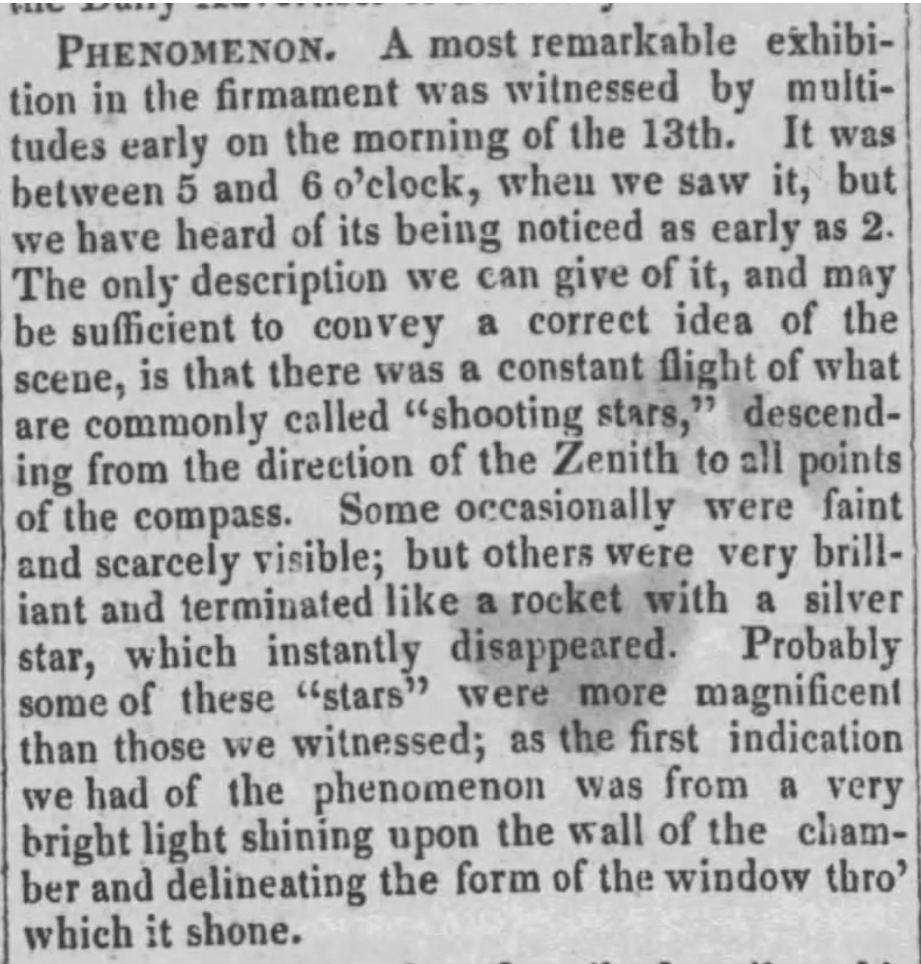
For those of us who might ask, “What morning? When?” upon considering “when the stars begin to fall,” you are now informed: it was a very real morning and very real showers of stars – or, specifically, meteors – in 1833.
Residents of the stately antebellum mansions weren’t the first to see the stars falling on Alabama and the rest of the South that night – the first were the African enslaved living, as many did, outdoors, or in small shacks which were not light secure. As they woke to the glory, the word was passed from the field settlements to shacks and cabins and to the great houses. In Alabama, the Florence Gazette reported there were: “thousands of luminous bodies shooting across the firmament in every direction. There was little wind and not a trace of clouds, and the meteors succeeded each other in quick succession.”
While many believed the phenomenon to be only seen in the southern U.S., it was merely the best viewing there. History records the account of Victorian astronomy buff Agnes Clerke of Boston, who wrote of an attempt to count the meteors “…Their numbers … were quite beyond counting; but as it waned, a reckoning was attempted, from which it was computed, on the basis of that much-diminished rate, that 240,000 must have been visible during the nine hours they continued to fall.”
An enslaved child in Maury County, Tennessee, Amanda Young, wakened in her cot to the sound of screaming. Young, who was born around 1862, shared her story through her great-granddaughter, Angela Walton-Raji, who recorded an elderly cousin’s verbal recital of their ancestor’s passed down history in 2010. Walton-Raji’s recounts Young’s words, “Somebody in the quarters started yellin’ in the middle of the night to come out and to look up at the sky. We went outside and there they was a-fallin’ everywhere!
“Big stars coming down real close to the ground and just before they hit the ground they would burn up! We was all scared. Some o’ the folks was screamin’, and some was prayin’. We all made so much noise, the white folks came out to see what was happenin’. They looked up and then they got scared, too. But then the white folks started callin’ all the slaves together, and for no reason, they started tellin’ some of the slaves who their mothers and fathers was, and who they’d been sold to and where. The old folks was so glad to hear where their people went. They made sure we all knew what happened … you see, they thought it was Judgement Day.”
Themes of resurrection, redemption and judgment are present even in the earliest lyrics of this anonymously composed African American ‘spiritual song,’ which first appears in A Collection of Spiritual Songs and Hymns Selected from Various Authors (Philadelphia, 1801), by Richard Allen (1760–1831). Reverend Allen was a Philadelphia minister who collected the newly composed music of Black congregations who were, through worship services, composing and shaping what African American spirituals came to be. The imagery of trumpets sounding, “nations underground” rising, restored, Christians singing, and shouts of wonder reflects the cacophony of that historic Leonid meteor shower in November – and reminded them to order their affairs in hope of meeting another tumultuous day, when the Morningstar will rise, and all other stars fall in worship.
See you there.
Ashcraft, Jenny. “November 12-13, 1833: The Night the Stars Fell.” FishWrap: The official blog of Newspapers.com, November 7, 2022. https://blog.newspapers.com/november-12-13-1833-the-night-the-stars-fell/.
O’Keefe, Donal. “‘They Thought It Was Judgment Day’: The Night the Stars Fell on the US South.” The Irish Times, November 11, 2019. https://www.irishtimes.com/culture/they-thought-it-was-judgment-day-the-night-the-stars-fell-on-the-us-south-1.4075652.
Most people have heard of sleep apnea, the condition that makes you stop breathing while you’re sleeping either because of blockage of your airway or because your brain doesn’t continue uninterrupted breathing in the way it’s supposed to. But did you know that a lot of people also stop breathing while they’re not sleeping? It’s called screen apnea, a phrase coined by writer and former Microsoft Executive Linda Stone in 2007. She noticed that she and others in her office block were inhaling as they read email on their phones or computers… and then never really exhaling. As the onslaught of workday digital interactions continued, they never regained a normal breath pattern, instead continuing to breathe shallowly and intermittently, heads down, as they absorbed information. Linda Stone was widely interviewed at that time, and recently NPR’s Body Electric replayed Ms. Stone’s latest tip for breathing well – kazoos.
Don’t have a kazoo? Don’t worry about it! A straw can do the same thing. Speech therapists have long used breathing through a metal straw as a Semi-Occluded Vocal Tract (SOVT) exercise. It’s a creative way to reset the voice, allowing vocal folds to vibrate more efficiently and to produce a stronger, clearer speaking voice. It’s just a bonus that the way you have to breathe while doing lip trills for choir can help relax you, too.
So, this summer, maybe do a couple of lip trills while you “doomscroll” through social media? It can’t hurt, right?
Keep breathing (please), and we’ll see you in August!
(Was your elementary or middle school one of those that required “vacation reports” the first week of school? If so, welcome back, students! If not, you lucky, incredibly lucky ducks…)
What’s a summer without summer concerts? The Oakland Interfaith Gospel Choir kicked off their annual visit to the far end of Alameda County at the Bankhead on the 27th. The mood was upbeat and the audience was clearly excited to be there before the concert even began, though we noted that four years in to their annual concerts at The Bankhead, the crowd was much smaller this year.
After an ebullient welcome by director Terrence Kelly, the concert started with “Clap Your Hands, All Ye People,” and segued into Richard Smallwood’s “Total Praise,” one of FPCL’s own favorites. Standout performances included Fred Hammond’s “When the Spirit of the Lord” and “We Shall Overcome,” which the crowd sang along to with gusto, joined hands raised. Much of the joy of the concert came from being invited to sing along, to dance in the aisles, and to generally make a joyful noise and add to the merry mayhem of the tumult of praise. It was definitely loud, but definitely fun.
As has been the case with many non-profit arts programs in this current political climate, OIGC has hemorrhaged support for their choir and the youth choir they sponsor, reflecting the cuts to the National Endowment for the Arts and other funding bodies. This, however, has not dimmed their joy nor slowed their steps, and they danced into – and out of – the theater, leaving our hearts lighter.
We saw many from FPCL, including some of you (Hi, Dr. Jennifer!), but for those who missed the show or want a second helping, Oakland Interfaith Gospel Choir opens for Tower of Power at the Alameda County Fairgrounds July 2nd. If you need an injection of joy, theirs is a gift like none other.
Happy Summer! 🌻 Sing on!
(P.S. – You are cordially invited to share what concerts YOU’RE hearing this summer! Meanwhile, enjoy a tiny taste of OIGC from their first appearance at The Bankhead.)
It’s a tiny bit of irony that Loving Day falls during Pride Month.
In 1958 a white man named Richard Loving and a Black and Native woman named Mildred Jeter got married in Washington, D.C. On their wedding night in Virginia, they were awakened with the door kicked down, flashlights in their faces, and officers asking Richard who the woman was with whom he was sleeping. Mildred insisted, “I’m his wife!” To which the sheriff replied, “Not here, you’re not.” Cuffed, Richard and Mildred were dragged away, in pajamas. Interracial marriage was illegal in Virginia where they were from… which was why they’d gotten married in D.C. to begin with (The license plate state motto “Virginia is for Lovers” is kind of a head-shaker, in retrospect).
After a terrifying night and a humiliating trial, the Lovings were given the option of a year in jail for both, or face twenty-five years exile from the State. Of course, they took exile. It wasn’t any easier in D.C., unfortunately. Sure, marriage was “legal” in D.C. and in many American states, but legal is sometimes just a word on a piece of paper. Many white Americans weren’t eager to create community with, support or to help Black people in 1958, nor were they eager to mix socially or economically with a crazy white man who got involved with them. After several years, exhausted by a life separated from their families where they couldn’t find decent housing, good jobs, or to basically exist without racist interference, the Lovings decided to go back to Virginia – and to take the case to court. They contacted the ACLU and found a pair of Jewish lawyers willing to speak to them – another less than popular member of the American melting pot. The Lovings took their case all the way to the Supreme Court. The last anti-miscegenation law (the offensive 1864 word combines the Latin miscere (to mix) and genus (race or kind)) in America was struck down on June 12, 1967. The U.S. Supreme Court justices ruled that distinctions drawn based on race were not constitutional. The court’s decision made it clear that Virginia’s anti-miscegenation law violated the Equal Protection Clause of the 14th Amendment.
Many interracial couples and transracial adoptees celebrate Loving Day as a way to celebrate that they belong, and that their family, in whatever shades and shapes it arrives, is valid.
It’s a tiny bit of irony that Loving Day falls during Pride Month, a time where we celebrate fiercely the right of everyone to have love and create a family as they see fit, but it feels like it’s the right place to me. Here’s to the very human desire to love and to BE loved, and the gift of God who put love into our hearts before we even knew what hearts were for. 🥂Happy Loving Day. Make it a lovely one!🥂 !